







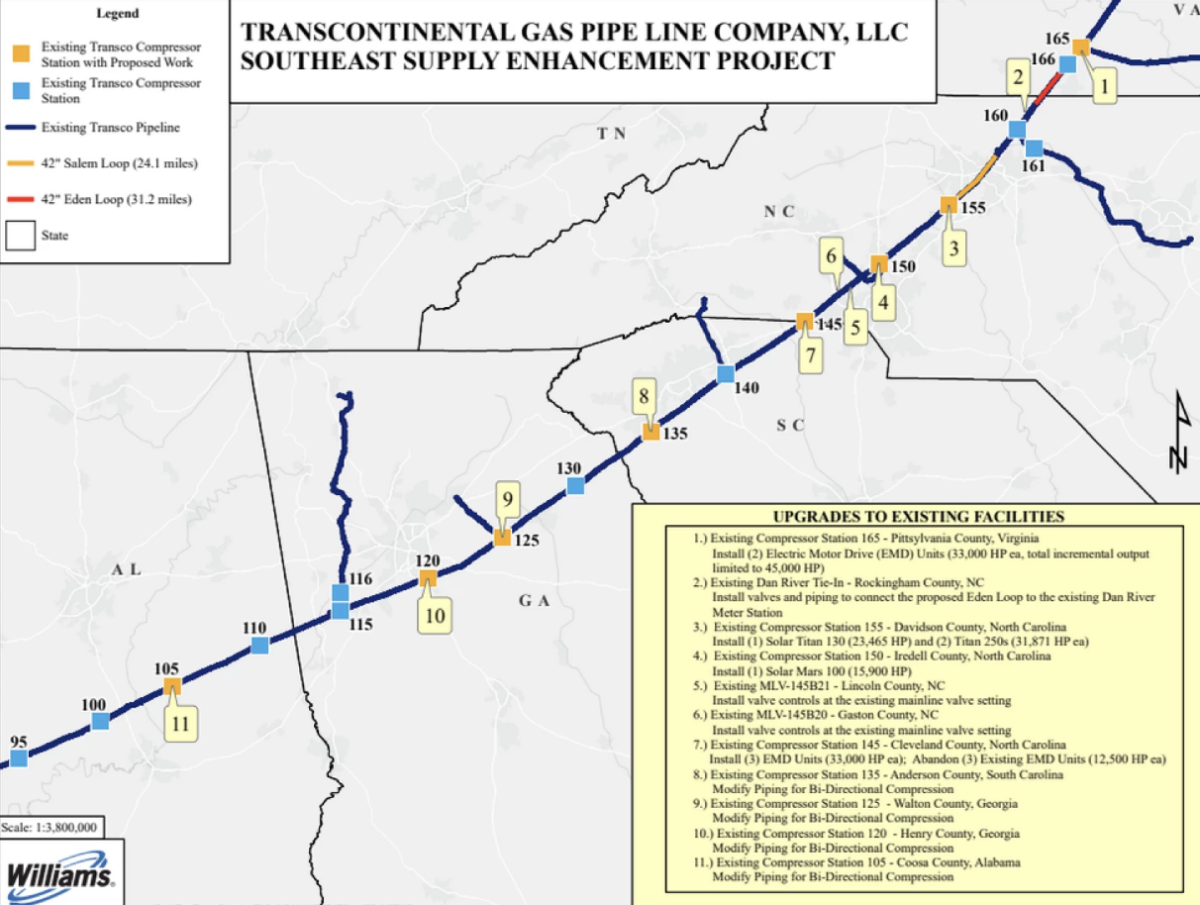











As of Feb. 20, the Federal Energy Regulatory Commission (FERC) has approved the construction of the Southeast Supply Enhancement Project (SSEP), as part of a larger pipeline expansion project that seeks to funnel more methane gas into Southern states from Virginia to Georgia.
According to a Feb. 2026 WXII 12 article written by Christina Solano titled “Guilford County advances agreements for 28-mile Transco gas pipeline after federal approval,” SSEP is a 42-inch diameter methane gas pipeline and will span 28 miles across Guilford, Forsyth, and Davidson counties. Construction is set to begin in March and will take around 90-120 days to complete.
Local communities worry that the construction of the pipeline will be an environmental threat. Lexington’s city council recently passed a resolution in January stating that they feel concerned regarding the construction of the SSEP pipeline. According to an Appalachian Voices press release from Dan Radmacer, as of Jan. 26, 2026, “Lexington is the sixth governing body to adopt a resolution of opposition to this project, following the town of Midway, the city of Greensboro, and Davidson, Forsyth and Guilford counties.”
Several efforts in opposition to the construction of the SSEP pipeline have continued despite FERC’s approval of the permit. According to a March 2026 wvtf article by Roxy Todd titled, “Environmental groups ask FERC to reconsider approval for SSEP pipeline,” the Southern Environmental Law Center and the Sierra Club have filed a request to FERC asking that they reconsider their decision.
The Piedmont Environmental Alliance, Appalachian Voices, Clean Water for NC, and other environmental organizations have been monitoring the situation closely, engaging in community advocacy and outreach efforts to inform the public about the possible environmentally degrading effects the pipeline could have on the local land and people.
When I asked Crystal Norford, an Environmental Justice Researcher and Organizer with Clean Water for NC, how methane gas pipelines can be harmful to communities, Norford noted, “Methane gas pipelines raise a wide range of serious concerns, from public health risks, residential safety hazards, and long-term environmental consequences.”
I also asked Norford how a methane gas pipeline would specifically affect those living in Forsyth, Guilford, and Davison counties. Norford explained, “SSEP is set to run next to schools, churches, businesses, and peaceful residential neighborhoods. The proximity of this dangerous and unnecessary infrastructure to everyday life is an injustice to North Carolina communities.”
Norford emphasized that the construction of the SSEP pipeline would be a health risk and injustice to community members, stating, “No community should be forced to risk its health, safety, and environmental integrity for fossil fuel infrastructure that will primarily serve distant interests.”
The claim that the SSEP pipeline will “serve distant interests” has been a point of concern for many local environmental organizations. A local organization, Appalachian Voices, is concerned that the SSEP pipeline is another example of the “overbuilding of fossil fuel infrastructure across the Southeast.” According to a tab on Appalachian Voices’ website titled, “Southeast Supply Enhancement Project,” the pipeline will not bring jobs to local North Carolinians, as the jobs for this project will be “temporary” and “filled by workers from out of state.”
Other local environmental nonprofits are worried that the SSEP pipeline will lessen sustainability efforts. The Piedmont Environmental Alliance has been striving towards a greener future for Forsyth County with their initiatives to solarize and electrify the Triad. The SSEP pipeline will further regional dependence on natural gas and fossil fuels.
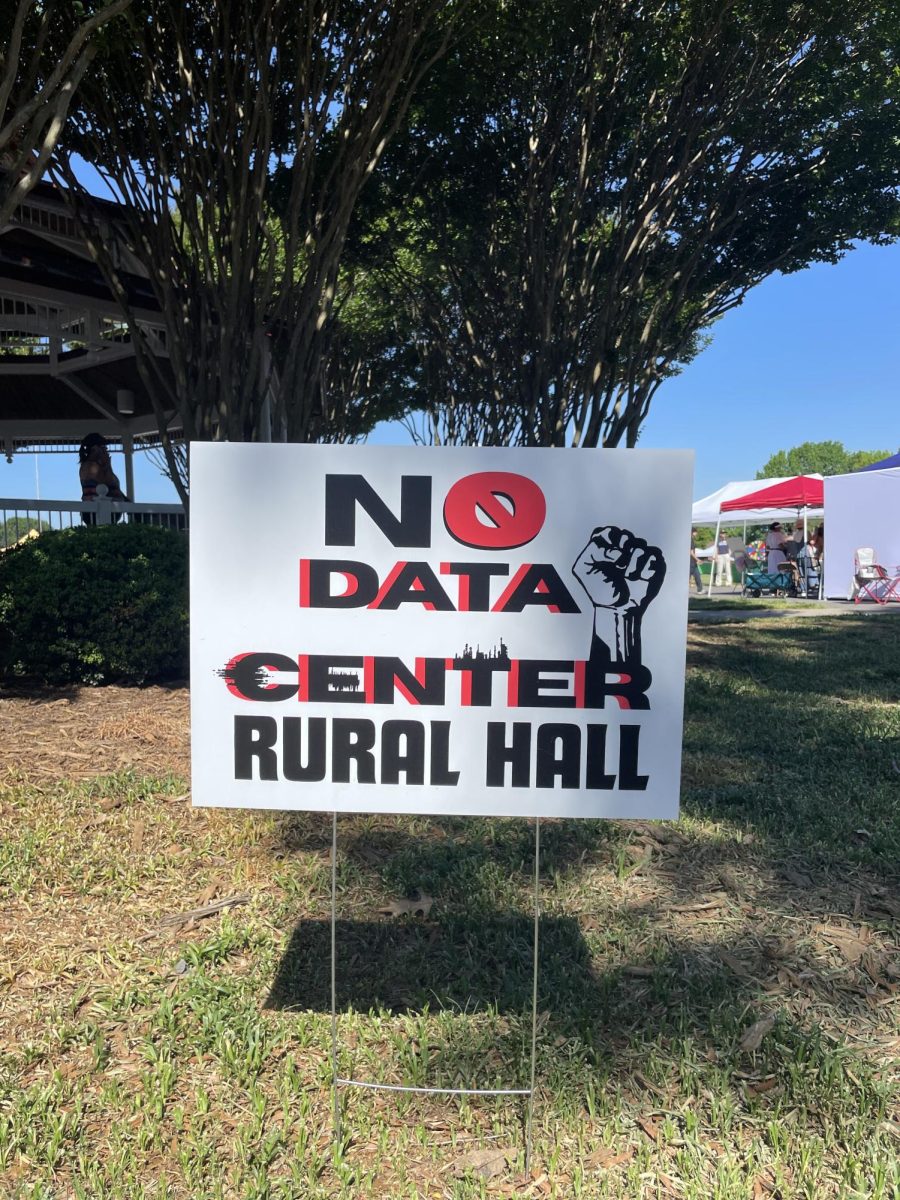
According to nossep.org, more information will be released soon about community meetings regarding the pipeline, which are to be held on April 7 in Oak Ridge, April 14 in Greensboro, April 21 in Kernersville, and April 28 in Winston-Salem.
As construction of the SSEP pipeline begins, The Salemite will continue to cover the issue.