















Jacob Elordi is not my Heathcliff, and Margot Robbie will never be my Catherine. Not a single whisper of Brontë remains.
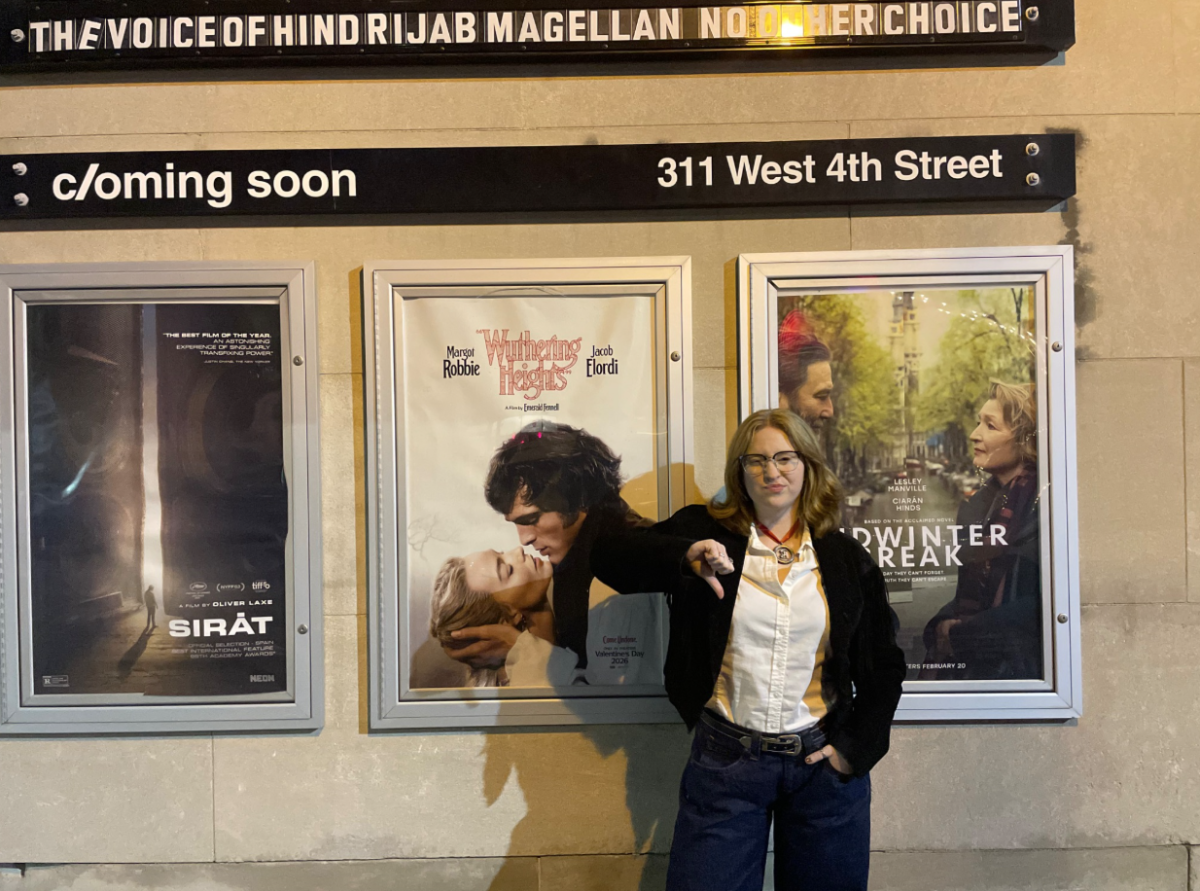
On February 12, Sam and I made our way to the movies on the opening night of Emerald Fennell’s adaptation of Emily Brontë’s literary classic, “Wuthering Heights.” Fennell is an Oscar award-winning director and screenplay writer known for “Promising Young Woman” (2020) and “Saltburn” (2023). When it was announced that Fennell would be re-imagining Emily Brontë’s “Wuthering Heights”, I felt uneasy. When the casting choices were revealed (Margot Robbie as Catherine Earnshaw and Jacob Elordi as Heathcliff), I was convinced a likely abomination was on the horizon.
The rollout of the film has been nauseating. Foul marketing. Lackluster fashion choices on the red carpet. Bizarre and obsessive interviews between Robbie and Elordi. (Robbie, noting that she “felt quite lost like a kid without their blanket” whenever she and Elordi were separated on set…Girl. Let’s get a grip.) I was willing to write this off as typical PR nonsense and nothing more. But then, I had to sit through the movie.
Sam and I shared the theatre with a mass crowd of women of all ages. Droves of mothers with their daughters. Flocks of college girls, sipping shyly on slurpees and nibbling coyly on their popcorn. A few lone ladies trickled in throughout the aisles, gazes plastered to their cellphones as they anxiously awaited the opening scene.
There is no doubt in my mind that Fennell is a gifted filmmaker. I like that she makes lascivious movies that men have been making for centuries without consequence. She creates enthralling visuals that are vibrant, sensual, and nostalgic. Her screenplays are current, culturally centered, and witty. She pokes fun at the relationships between men and women and the absurdity of wealth. Fennell exists within the current moment as an often perverse figure whose contributions to film have been personally very well received.
But she never should have touched Wuthering Heights.
I wouldn’t say I have a normal relationship with Emily Brontë. I have seen the couch she died on at the age of thirty-one. I walked up the oak staircase in her childhood home, ran my hand along the same railing she likely grasped as she sulked downstairs as a teenager, yearning for a life outside of her childhood home in Haworth, England. And, of course, I’ve read “Wuthering Heights”, a tragic tale filled with emotional turmoil, vast cathartic beauty, macabre depictions of desire, guttural pain, class inequity, and boastful displays of gruesome violence. To say “Wuthering Heights” is just a love story, as Fennell’s marketing implied, would be a disservice to Brontë and the novel itself.
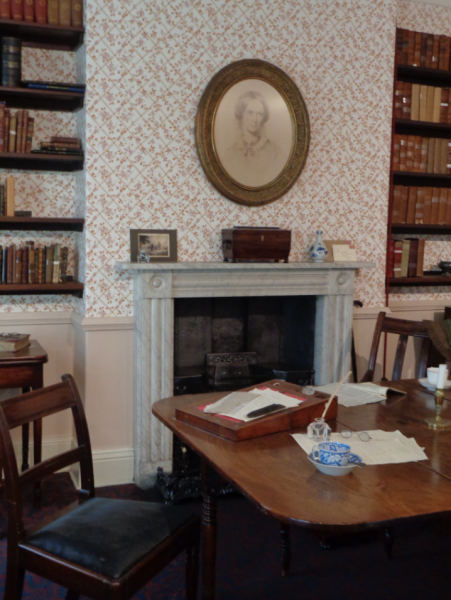
The desk where Emily Brontë wrote “Wuthering Heights” at her childhood home in Haworth, England. Photo Credit: Clare Buchanan
To all the other disillusioned and disgruntled writers out there, imagine the feat of writing a novel like “Wuthering Heights.” It was Emily Brontë’s life’s work. Brontë rarely left the confines of the moors. She knew the land as she knew herself, and she weaved her adoration and disgust for the moors through her characters; Catherine was the stubborn daffodils that bloom after the harsh, windy, and brooding winters personified in Heathcliff.
In response to this, Fennell’s “Wuthering Heights” was a two-hour wet dream. There is an innately lustful sensuality in Brontë’s “Wuthering Heights” that was never outright mentioned. There is allure in all that was not said and in all that was not shown. Readers didn’t need to see Heathcliff grab Catherine by the crotch to know he desired her. Brontë made that pretty clear when Heathcliff returned to find Catherine married to Edgar Linton- his jealousy overtaking him so that he bashed his face repeatedly into a tree, with such force that he began to bleed straight from his eyesockets. There is a different type of tension in imagining what was imagined between Catherine and Heathcliff during all those years apart. There was no room for imagination in Fennell’s rendition of Catherine and Heathcliff’s passionate love affair. Everything was a bit too clear.
What was once a gothic and foreboding commentary on English institutions of power and injustice has become a degrading, gaudy, and cheap Vaudeville performance. And just a side note — why was everyone in this movie constantly sweating? It is bloody freezing on the moors!
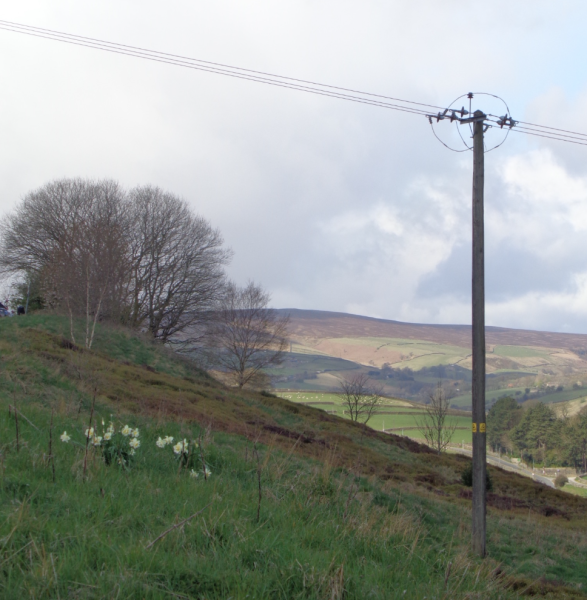
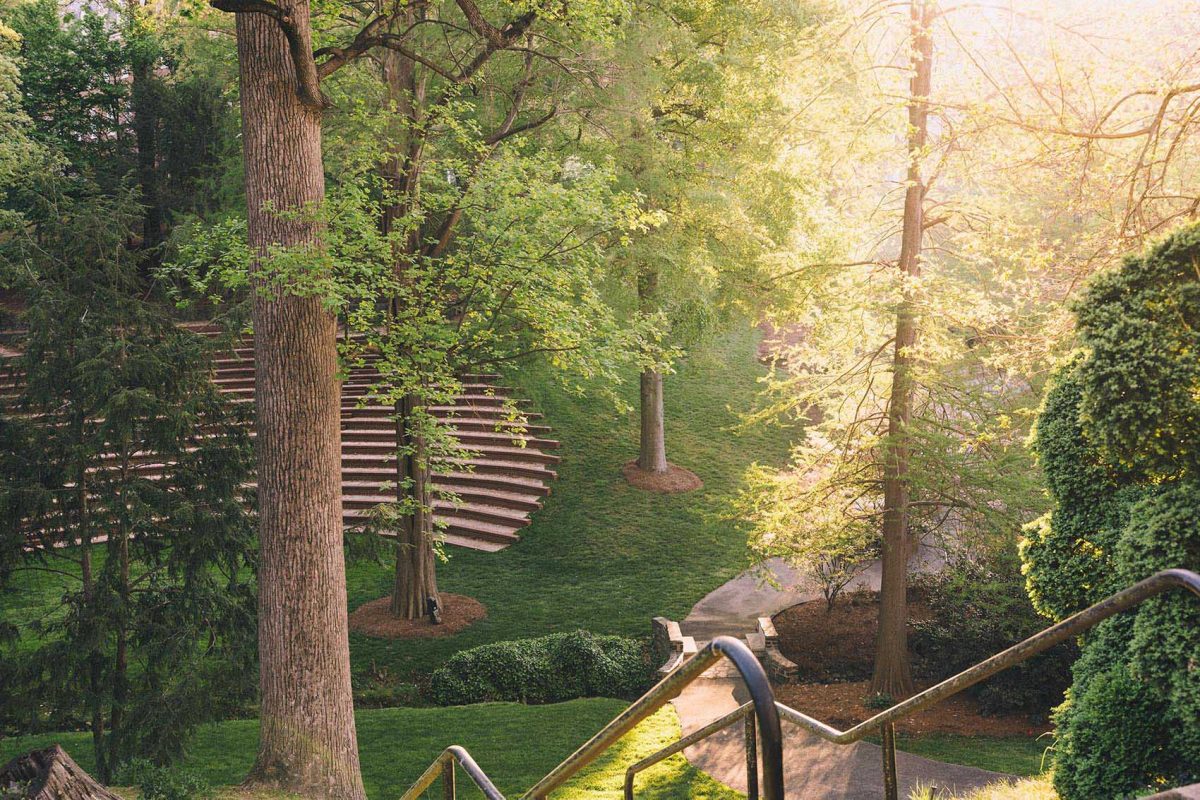
The moors in April! Photo by:: Clare Buchanan
In general, I know it is futile to compare film adaptations to their genesis forms. You can only fit so much of a book’s plot, purpose, and pathos into two hours of screen time. But, film also provides a rare opportunity to create a new perspective of a beloved novel through sight and sound, allowing for the possibility of an even more abundant storytelling experience. Film adaptations should respectfully add color and vibration to a plot a writer was able to craft through the use of merely 26 letters mixed together on a page, the black and white skeleton that readers then dress with fleshy visions of character and dialogue and description as they let their imagination take hold of them. A film should reflect this delicate and sacred relationship between a writer and a reader. Let us remember — Emily Brontë is not merely just any writer, and “Wuthering Heights” is not just merely any novel whose basic outline can be morphed and manipulated to satiate the current trends of the internet and lewd viewers looking for a quick Valentine’s Day parasocial tryst.
I see Fennell’s vision- the gluttonous and gaudy and hilariously romantical fantasies of one’s fourteen year old self do make for a very indulgent and overly ripe (essentially rotting) premise for a gothic film. How grand it is to be historically inaccurate! Yes, sure– dress a conventionally attractive woman confined to the walls of her English country estate in black latex and have her adorned in iridescent cellophane and ravaged in the dark corners of a rose garden! And yes– be perverted! Throw all caution to the wind and distort reality with absurd fantasies that blur the lines of morality and toy with the concept of power. Make that movie– and cast some of the most over-saturated actors in Hollywood to star in it and get Charli xcx to write the next greatest club classic for it and make millions of dollars at the box office and call the whole thing art!
But don’t take something sacred and make it cheap, just to make a statement.
As the ending credits rolled, everyone around Sam and I were in tears. It made me realize how much the women of the world seem to think they need this. In this current moment, women live in a world where the prospects of romantic and sexual relationships are often shrouded by the ever-present reality of misogyny, both its grotesque materializations and its anti-climactic disappointments that make frequent appearances in the dating scene. I force no shame onto those who needed to indulge in a filthy fantasy like Fennell’s adaptation of “Wuthering Heights” this Valentine’s Day — it’s safer to indulge through the screen than it is to attempt the fantasy in the real world.
But Brontë’s literary masterpiece should never have been the jumping-off point.
In my mind, Fennell and Brontë have never intersected, and right now, in this moment, the moors lie barren and quiet under a wide moon, and hopefully, in whatever other dimension Brontë now exists within, she has no way of accessing the internet or that one interview Robbie and Elordi did for Vogue Australia.