













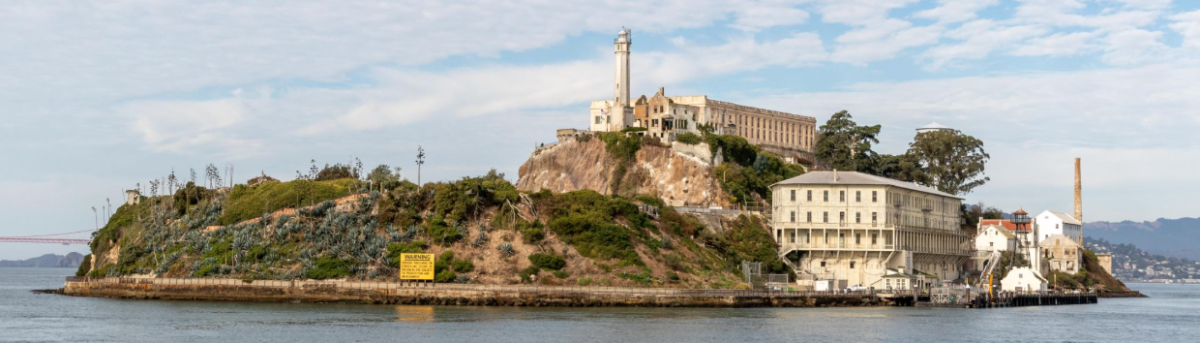











For the 2027 fiscal year budget proposal, President Trump requests $152 Million to restore the Alcatraz Prison in order to, in Trump’s words, “house America’s most ruthless and violent offenders,” according to a New York Times article posted April 3 titled “Trump Seeks $152 Million to Begin to Turn Alcatraz Back Into a Prison” by Soumya Karlamangla and Heather Knight. There is immense opposition to this potential project from San Francisco, where the prison is a popular site for tourism — an industry on which the city depends greatly on.
The cause of the Alcatraz shutdown in 1963 was that it was too expensive to operate. In an April 3 Reuters article titled “Trump seeks $152 million to reopen Alcatraz as active prison” by Nate Raymond, he quotes the Bureau of Prisons, which states that operating Alcatraz Prison was “nearly three times as costly to operate than any other federal prison.” The New York Times explains that even though Alcatraz’s location is ideal for keeping prisoners, with its isolated location surrounded by cold, violent waters, all supplies must be brought in by boat. Additionally, the April 3 Guardian article titled “Trump requests $152m funding to restore Alcatraz as prison” by Uwa Ede-Osifo points out that, according to the San Francisco Standard, the facility has no gas, running water, power, or working sewage system.
Another reason why the potential reopening of the Alcatraz Prison is alarming is that taxpayers will be funding this project. As stated in The Guardian article, former Speaker of the House, Nancy Pelosi, says “it will be nothing more of a waste of taxpayer dollars.” According to Ede-Osifo, the $152 million will only cover the first year of restoring the prison, and California State Senator Scott Weiner predicts that the project could amount to over $2 billion. According to the New York Times, although this proposal is assumed to not be taken seriously, former Attorney General Pam Bondi and Interior Secretary Doug Bergum have already visited the island and deemed it a “terrific facility.”
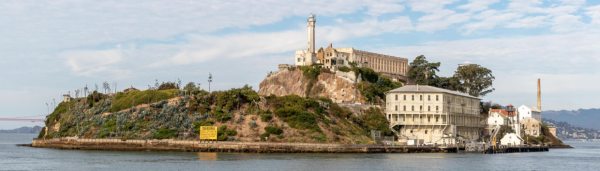
Photo by: Kirke Wench / National Park Service