By Sara Vargas
I remember hearing President Trump’s vow to carry out mass deportations “starting on day one” of his second term.
It’s incredibly jarring to hear the leader of a country, especially your country, launch an “aggressive” initiative aimed at members of your community. As I drove back down to Salem from D.C. on Inauguration Day, all I could think about was everyone I knew who was undocumented. It made me uneasy to think that some of the people I’ve grown up with, those who’ve become such an integral part of my life, could be taken away at any given moment. People who have come here in search of the coveted “American Dream”, a yearning for freedom and justice- yet here we are.
Throughout his re-election campaign in 2024, Trump had sworn to launch “…the largest domestic deportation operation in American history.” His campaign’s primary rhetoric would rely on this plan apart from providing tax cuts and tackling inflation rates. However, he failed to mention in his speeches the sheer complexity and large cost of said operation.
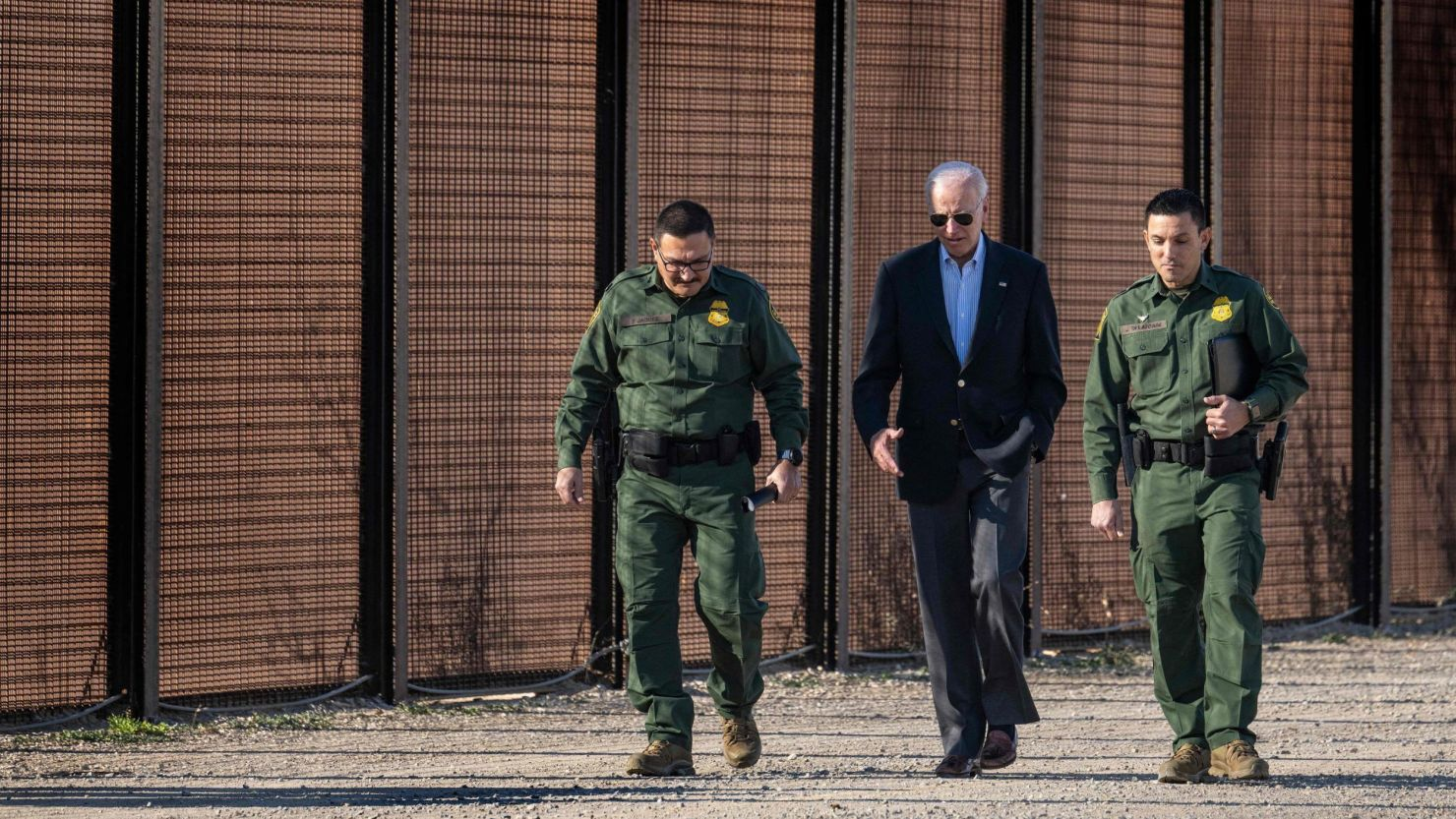
Former President Joe Biden at the Mexico Border in El Paso in 2023 (Photo Credit: CNN)
It is important to note that the history of immigration policy in America is quite extensive and as generations have passed, it has gotten more complex. In 1986, The Immigration Reform and Control Act was passed under former president, Ronald Reagan, an act that immensely changed immigration law. While IRCA granted amnesty to individuals who arrived prior to 1982, it made the hiring of undocumented workers illegal. Employers who knowingly hire undocumented workers could even face imprisonment. It was a strategic ploy to discourage immigrants from coming to the country in search of job opportunities. Under IRCA, the modern process for obtaining citizenship was established. Ten years later, The Illegal Immigrant Reform and Immigrant Responsibility Act of 1996 was passed, essentially cracking down further on illegal immigration* and increasing security at the southern border. The shift in immigration policy following the tragedy of 9-11 had been stricter than ever before and now concentrated its focus equally internally in and externally out of the country. In 2012, during Barack Obama’s second presidential term, he established the Deferred Action for Childhood Arrivals program, where immigrant children were given protection against deportation and identity documents. Shortly after this, he announced an executive order that would extend the same protections to the parents of these children, yet it was blocked after much backlash from state governments. At the same time, more than 3 million were deported under the Obama administration, and the Biden administration deported more individuals than Trump had during his first term.
Regardless of who was in office, deportation efforts have been ongoing, and if anything, increasing steadily due to the overwhelming volume of people at the border. Now, both parties stand divided when it comes to the radical enforcement of deportation.
President Trump has made it clear that his intentions behind these mass deportations are to provide American citizens with more jobs and to decrease the crime level across the country. However, both of these reasons have already been debunked– more immigrants do not directly create more crime, nor do more immigrants mean fewer jobs for those who already live here.
During Trump’s first week in office, he spearheaded a string of Executive Orders surrounding mass deportations, including a halt on legal services provided to immigrants seeking to stay in the U.S., and increased detainments by ICE. Amidst Trump’s frenzy of executive orders signed in the past few weeks was the proposal to end birthright citizenship: a constitutional cornerstone of the American government and democracy. The monumental overturn of The Dredd Scott case is why we have birthright citizenship non-discriminatorily available to all today. It is a necessary safeguard of the rights of the American people. Trump’s proposal to reverse a critical 150-year-old Supreme Court decision aims to deny children born in the U.S. with immigrant parents *the term “illegal immigrant” refers to those who entered the U.S. without a VISA or other form of federal permission or under asylum their right to citizenship. If passed, the executive order would prohibit children with immigrant parents born after February 19th of this year from obtaining any sort of federal documents such as a social security card or passport- you could be born here yet still be undocumented. However, it would be incredibly hard for this to become a reality. Maryland federal judge, Deborah Boardman, has already apportioned an injunction against the order, and even if the issue made it to the Supreme Court, that would present an entirely new set of challenges.
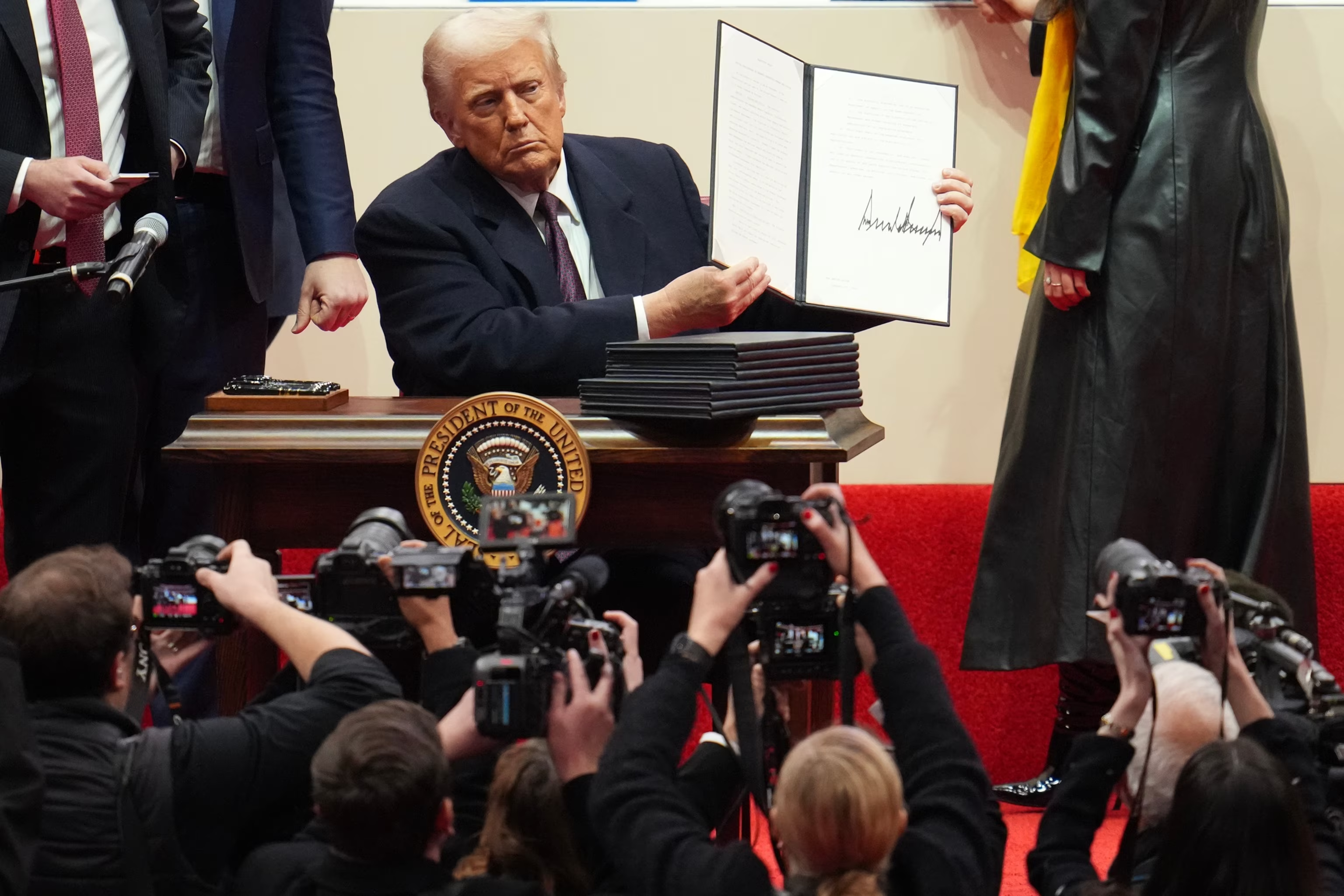
(Photo Credit: ABC News)
Read: How does an Executive Order work?
In another executive order, Trump declared a national emergency at the border. He has planned to deploy the federal military such as the Army and Marine Corps to the border and to assist with arrests. While American forces have been present at the border in the past, they’ve never been directly involved because of The Posse Comitatus Act, which prohibits the involvement of federal troops, with some exceptions, in state-level affairs. A similar order signed was made to ‘Protect the American People against Invasion’. It would fast-track the actions taken by the Department of Homeland Security to deport undocumented individuals. Under this, Temporary Protection Status and Employment Authorization Documents would no longer be extended or made. Laws made under the Biden administration that provide asylum to immigrants, keep families together, and make the immigration and naturalization legal processes more equitable, would all be rescinded under this executive order.
Amidst the ever-changing world around us, it’s essential to remain aware of your rights. Like in every other detainment, you are protected by your Miranda rights; you have the right to remain silent until you can obtain legal counsel. If you are not a citizen, you do not have to answer them when asked about your legal status. If ICE officers show up at your home, they are not allowed in unless they have a signed warrant from a judge. However, if they are given consent by the home’s occupants, they can enter. Which is why it’s important that you do not open the door before asking them to identify themselves and if they have a signed warrant. If you are a citizen and witness someone being detained, you have the right to document what is happening as long as you do not interfere with the detainment in any way. If you know someone who has been detained by ICE but do not know where they were taken, the DoHS has an Online Detainee Locator System for those who’ve been in custody for more than 48 hours.

(Photo Credit: ACLU of Virginia)
There are a variety of resources such as free legal counsel for detained individuals. Below are a few sources which may be helpful:
- Know Your Rights | Immigrants’ Rights | ACLU
- Know Your Rights: If You Encounter ICE | National Immigrant Justice Center
- Resources for Immigrants
- Resources – National Immigration Law Center
The American Civil Liberties Union’s “Immigrants’ Rights’ Project offers an extensive guide and resources in different languages as well.
During times of uncertainty, it is important to not only support those in your community, but to stay on top of what’s going on around you. Along with other local and national-level news sources, The Salemite will continue to provide you with reliable and relevant information and resources.
 The Salemite- Salem College's Newspaper
Leave a comment