The 2024 Running Resurgence, the 1970s Running Boom, and Jimmy Carter as an O.G. Running Influencer
By Chloe Snow
Running is both a sport and an economy: there are booms and there are busts. What we are seeing now is a running boom.
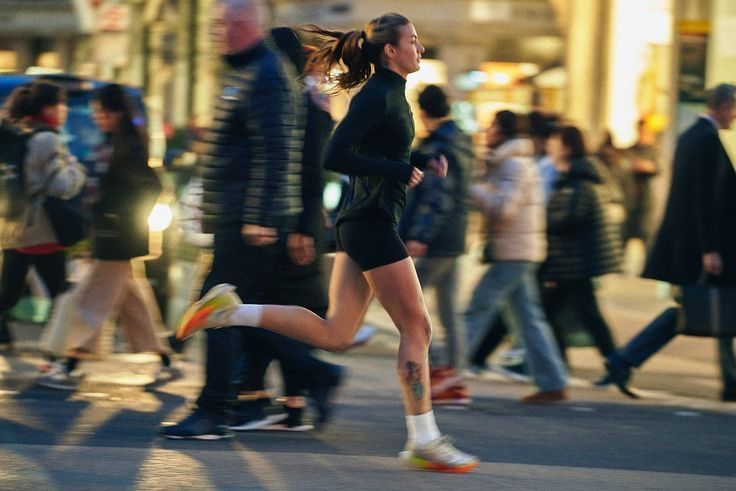
Across social media platforms in 2024, running content soared. Everywhere I looked, on almost any virtual platform, someone had posted a video of themselves holding their phone in an outreached arm, somehow smiling, and holding up four or five fingers to indicate the number of miles they had run as they pounded their feet into the pavement. I even saw runners in person, out in the wild if that could be believed, meandering down streets, checking their apple watches, and trying not to heave for breath. Kudos to these folks.
Everyone seemed to be running, especially influencers and internet personalities who also used their platforms to showcase new running apparel and rank the best running shoes (I wish someone would sponsor me too). It seems that I am not the only one who has seen this trend as other journalists and publications have recently discussed the uptick in running in their articles.
And why? For what purpose does this running boom serve? How did running become, what I am going to call in this context, an influencer sport? Is running worth the hype?
What Other Journalists are Saying:
I am not the only journalist who has witnessed the increasing popularity of running. The Wall Street Journal published this lovely little subtitle to their article “Why Marathon Running is Booming” that “More people are taking on 26.2-mile runs, thanks to squishy shoes, running groups and Gen Z athletes” (Wall Street Journal). Other reports agree that Gen Z seems to be the running force behind the uptick in popularity. The Great Run Company, a U.K. based company whose mission is to provide opportunities for mass sports participation (The Great Run Company), saw a 39% increase in participation versus 2023 in the Great Run Series (Sports Tourism News). In the same report by Sports Tourism News, statistics show that 47% of runners are 35 and under, which shows that there is an interest in running by the younger generation (Sports Tourism News).

Photo Credit: (Instagram)
Reasons for Running & The 1970s Boom:
Since running is on the rise, why is it so? It seems there are certain driving factors that push running as both an independent recreation and a social sport. For starters, and from a personal example, former athletes might try running as either an alternative activity after retiring from previous athletics—as in my case—or as supplementary exercise to their training. As a retired dancer, I find running to be a great cardiovascular activity post-dance because it gets me moving. Running is also a great form of exercise for current athletes as it builds endurance. Also, running is a convenient sport that requires a pair of shoes and somewhere to run, an aspect that was also agreed upon during the 1970s running boom.
45 years ago on Sept. 29, 1979, Jane Leavy and Susan Okie—two journalists at The Washington Post— published an article “The Runner: Phenomenon of the 70s.” The first couple of lines, which describe the typical 1970s runner, are as insightful as they are funny and also show deep gaps in who was and was not participating in running: He is white, white collar and well off. He earns about $30,000 a year and probably has a graduate degree. He eats meat, does not smoke and his resting pulse is 52 1/2 beats per minute. He is the average runner. He could be anyone. He could be Jimmy Carter (Washington Post). It is interesting that the article mentions the race, gender, and socioeconomic gaps that separated a vast majority of people from running. That being said, hopefully in 2024 and in 2025, we are bridging that gap between who “can” and cannot participate in running.
Before we discuss the social trends, let us take a brief detour regarding the running influencer Jimmy Carter. How ironic that at the time of Former President Jimmy Carter’s death last week, I would find he was really big into running. The image below is one of my favorites: Jimmy looks exhausted but Rosalynn looks composed and graceful.

Photo Credit: Runner’s World (Runner’s World).
Though back to my point, the article by the Post quoted John Gotjen who said that running has been hyped and heralded as the sport that requires nothing and no one. One running writer has called it “the most democratic sport.” You don’t need a partner, a court, or even any skill (Washington Post).
In 2024 however, running is a communal sport as much as it is an independent one, a stark contrast to the ideas of the 1970s as presented in the article by the Post. This could be due to our post-COVID and heavily online-oriented world where finding and maintaining social connection can feel like a lost cause, yet we strive to do so anyway. So may I introduce the “run club.” One statistical analysis shows that Gen Z runners’ primary motivation for joining a running club was to connect with others (Runner’s World). The same article mentions that 66% of Gen Z respondents said that they made new friends through a fitness group in 2024 (Runner’s World). In fact, according to their statistics, over the previous year, the number of running clubs on Strava increased by 59 percent. Even more interesting is how these running clubs are leading to…dating. One-fifth of Gen Z said that they had been on a date with someone they met at a group fitness activity (Runner’s World). I first came into contact with run clubs via a YouTube channel early last year by the social media influencer, Reneé Maudlena Noe, (reneenoe) who hosts her own run clubs, and I thought how cool it was to host a community sporting event that is very similar to The Great Run Series in the U.K. Then I learned there are local run clubs all over Winston-Salem (The Go-To Winston-Salem). For the most part, joining a fitness club is quite simple.

Photo Credit: (Runner’s World)
Lasting Thoughts
For the most part, running should continue in its popularity in 2025 as more and more people find running, walking, or any type of communal recreation as being beneficial to physical, mental, and even social health. Running as an “influencer” sport could occur because, really, it’s simple. Even I could do it. Because of the social media content bombardment, I somehow found myself during the fall of 2024, when it wasn’t one hundred degrees, throwing on a pair of tennis shoes and going after it, jogging around neighborhoods and on streets. The first week, I thought I’d absolutely die. Everything hurt: my feet, my legs, my chest from heaving for breath. By week two, the two miles became progressively easier and maybe even a little bit enjoyable? The more I’ve clocked up miles over winter break, the more I have come to reflect on how easy it is to get caught up in the act of running, how freeing it is to lose one’s body in the act of jogging, and that maybe the hype is just as good as it seems. Then I think how simple it could be to film myself on this running “journey,” garner some views, and maybe—in my wildest dreams—Hoka will sponsor me. No, I am not going to become an internet personality but maybe someone else will as they take up this art we call running.
 The Salemite- Salem College's Newspaper
Leave a comment