“What is it you plan to do with your one wild and precious life?”
-Mary Oliver
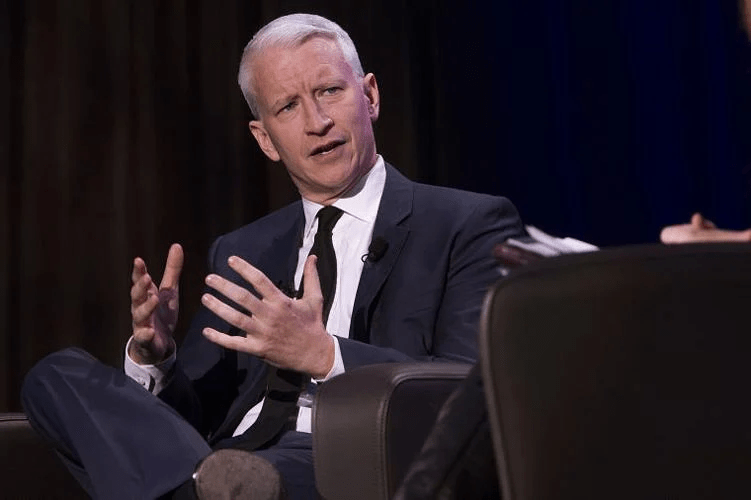
On Nov. 21, students and spectators gathered for a student-led forum featuring the journalist, podcaster, and change agent Anderson Cooper in Wake Forest’s Wait Chapel.
The forum featured two student moderators who led the discussion about Cooper’s professional and personal life. His talk was relevant to students and adults alike because hasn’t everyone asked: what should I do with my life?
Attempting to quote Mary Oliver, Cooper said, “Mary Oliver, the poet, has this line ‘What are you going to do with your one wild life’, uh, I blew the line.” What he meant was, “Tell me, what is it you plan to do with your one wild and precious life?”
Cooper talked about his early life which was defined by loss and unsureness. At age 10, he lost his father. At age 21, he lost his brother. Along with these losses, as a college student, he did not know what career he wanted to pursue.

Photo Credit: Poynter
So, he decided to forge a press badge and sneak into a war zone in southeast Asia, influenced by the articles he’d read about Vietnam war correspondences. Cooper was interested in people, particularly humanity’s drive to survive at all costs despite profound loss and devastation. War zones are places where devastation has no walls. Greif is on full display. Yet, Cooper recalls, even in the darkest corners of the human experience, paradoxically, there is light. How? In these dark spaces, there exists extraordinary hope, acts of humility and sacrifice, and most importantly, love.
“Even in the midst of, you know, really terrible things, there are bonds between people remaining,” Cooper says.
To understand these experiences, journalism is a unique position to uncover and understand people’s stories. Cooper reinforces the importance of truthful journalism. It is the journalist’s job to figure out what is true and not true.
“The basics of journalism are … about finding out what is true, what’s not true, and reporting that and … letting people make up their own minds about how they interpret facts” Cooper states.
The journalist must “present that information on the most basic level,” he adds.
This applies to all of us. We must decide how we respond to information and do so meaningfully. Further, we must decide what we will do with our one life. While Cooper does not advise going to a war zone in southeast Asia, the message is clear: find what you love.
This is not to say that we are only on the cusp of what is to come, but we, as college students, already are someone, people with our own experiences and values. In this stage, the key is finding a way to use our experiences to make a change.

Photo Credit: The Shorthorn
 The Salemite- Salem College's Newspaper
Leave a comment